


When your vehicle is damaged by hail, a parking lot mishap, or a minor collision, you want a repair solution that restores its appearance quickly and correctly. Paintless dent repair, commonly known as PDR, has become one of the most trusted methods for fixing minor dents because it removes imperfections without sanding, fillers, or repainting.
If you are researching dent repair options, you likely want answers to practical questions. How much does paintless dent repair cost? How long does dent removal take? Will the repair affect resale value? Understanding how PDR works, along with its advantages and limitations, helps you make an informed decision before scheduling service.
What Is Paintless Dent Repair?
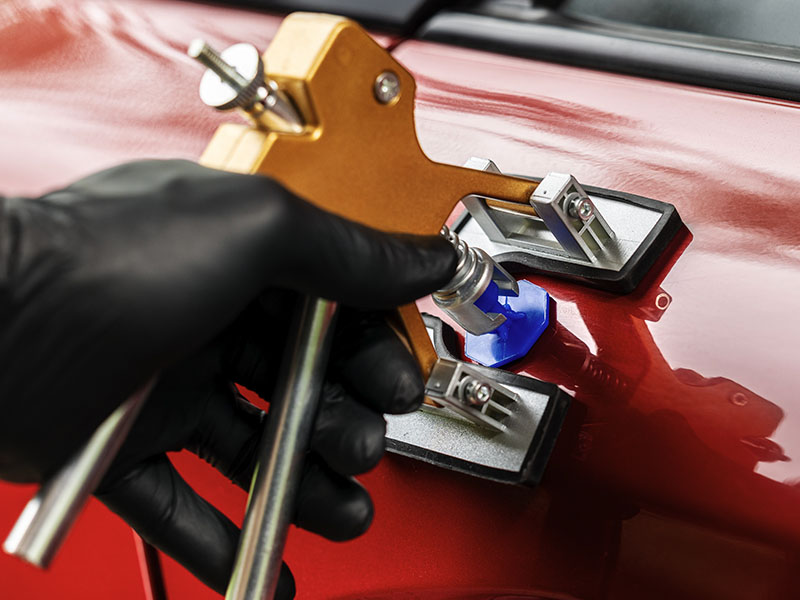
Paintless dent repair is a specialized auto body repair technique designed to remove minor dents and dings without altering the vehicle’s original paint finish. Instead of sanding the surface or applying body filler, a trained technician carefully reshapes the metal from behind the panel using precision tools.
When your vehicle’s paint remains intact, this method can restore the panel to its original contour while preserving the factory coating.
You will commonly see paintless dent repair used for hail damage repair, door ding removal, minor creases, and light collision dents. The process works on both steel and aluminum panels, although aluminum requires a more advanced technique due to its rigidity.
Unlike traditional auto body repair, PDR does not involve primer, sanding, repainting, or curing time. That means fewer materials, faster turnaround, and no risk of paint color mismatch. However, success depends on dent size, depth, and location. A professional inspection ensures that paintless dent repair is the correct approach for your specific damage.
The Key Benefits of Paintless Dent Repair
If your vehicle qualifies for paintless dent repair, you gain several meaningful advantages that make it one of the most efficient dent removal methods available.
Lower Repair Costs
Paintless dent repair eliminates the need for paint products, body filler, and extensive refinishing labor. Because fewer materials and less time are required, the overall dent repair cost is often lower than traditional auto body repair. For multiple small dents such as hail damage, the savings can be substantial.
Faster Turnaround Time
Traditional collision repair can take several days due to sanding, repainting, and drying processes. Many PDR repairs can be completed within hours, especially for minor dents and door dings. Faster service means less disruption to your schedule.
Preservation of Factory Paint
Your factory finish is applied under controlled manufacturing conditions and is typically more durable than aftermarket paint. Preserving that original finish protects resale value and eliminates concerns about color matching or overspray. Maintaining the factory coating is one of the strongest advantages of paintless dent repair.
Environmentally Responsible Repair
Since PDR does not require paints or chemical solvents, it reduces emissions associated with refinishing. If you prefer a more environmentally conscious auto body repair solution, this method supports that goal.
What Types of Damage Qualify for Paintless Dent Repair?
Not every dent can be corrected with paintless dent repair. Knowing which types of damage qualify helps you set realistic expectations and avoid unnecessary repair delays.
Hail Damage
Hailstorms frequently leave clusters of small dents across horizontal panels such as the hood, roof, and trunk. If the paint surface remains intact, these shallow dents are often ideal candidates for PDR.
Door Dings and Parking Lot Damage
Door dings are among the most common cosmetic issues drivers face. When another vehicle’s door makes contact and leaves a small indentation, paintless dent repair is typically effective as long as the paint is not chipped or cracked.
Minor Creases and Soft Dents
Low-speed impacts can cause shallow creases along body panels. If the metal has not been severely stretched and the paint remains undamaged, PDR can often restore the panel’s original shape with excellent results.
Steel and Aluminum Body Panels
Modern vehicles combine steel and aluminum components. Both materials can be repaired using paintless dent repair techniques. Aluminum panels require additional expertise, making technician experience especially important.
Understanding the Limitations of Paintless Dent Repair
Although paintless dent repair offers significant benefits, it’s not a universal solution.
Paint Damage Requires Refinishing
If your dent includes cracked, chipped, or scratched paint, PDR alone will not restore the surface. In these cases, traditional auto body repair with refinishing is necessary to properly protect the damaged area.
Deep, Sharp, or Severely Stretched Dents
When impact force stretches the metal beyond its elastic limit, reshaping alone may not fully restore the panel. Sharp creases and deep collision dents often require body filler and repainting to achieve a smooth finish.
Restricted Panel Access
Paintless dent repair relies on accessing the backside of the dent. Damage near structural reinforcements, tight panel edges, or enclosed areas may limit tool access and reduce effectiveness.
Previously Repainted Surfaces
Factory paint is generally more flexible than aftermarket finishes. If your vehicle has undergone prior bodywork, the paint may crack during manipulation. A professional evaluation helps reduce this risk.
Paintless Dent Repair vs Traditional Auto Body Repair
Choosing between paintless dent repair and traditional auto body repair depends on the extent of the damage and your expectations for durability and appearance.
Paintless Dent Repair
- Ideal for minor dents, hail damage, and door ding removal
- Preserves factory paint
- Lower average repair cost
- Faster completion time
- No color matching required
Traditional Auto Body Repair
- Required for deep dents and collision damage
- Necessary when paint is chipped or scratched
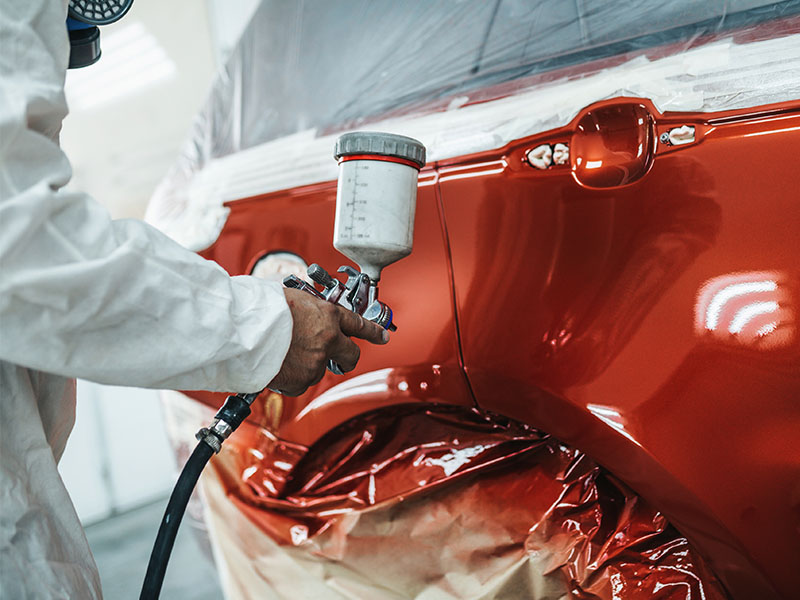
- Involves sanding, filler, and repainting
- Longer repair timeline
- Restores protective finish when metal is exposed
A proper assessment ensures the method chosen aligns with your vehicle’s specific needs.
Choosing the Right Auto Body Shop for Dent Repair
The success of paintless dent repair depends heavily on technician training and experience. Precision and patience are required to reshape metal without damaging the paint surface.
You should choose an auto body shop that offers both paintless dent repair and full collision repair services. This ensures you receive an honest recommendation rather than a one-size-fits-all solution. Transparent communication, detailed inspections, and clear estimates are signs of a reputable facility.
Our professionals at Mudgett’s Auto Body carefully assess every vehicle before recommending a repair strategy. If paintless dent repair is the correct choice, we use advanced tools and proven techniques to deliver precise results. If traditional bodywork is necessary, we explain the reasoning and complete the repair according to industry standards.
Selecting experienced technicians protects your investment and ensures your vehicle maintains both its appearance and structural integrity.
Is Paintless Dent Repair Right for You?
You now have a solid understanding of how paintless dent repair works, when it makes sense, and when traditional auto body repair may be the better option. The right approach depends on the condition of your paint, the depth of the dent, and where the damage is located.
Mudgett’s Auto Body offers both paintless dent repair and conventional auto body services. We begin with a thorough inspection and provide a straightforward recommendation based on what will properly restore your vehicle. If PDR is a strong fit, we complete the repair using precise, industry-proven techniques.
If your vehicle has recently been damaged, contact us today to schedule an assessment and receive expert guidance that balances cost, quality, and long-term results.